
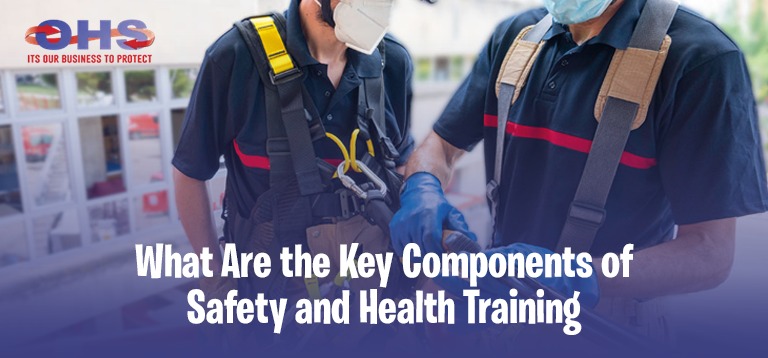
Safety and health training involves numerous essential components. These include hazard identification, risk assessment, PPE usage, emergency response, fire safety, first aid, legal compliance and frequent refresher courses. These parts together assist workers in staying safe and help UAE enterprises stick to local safety standards.
What Is Safety and Health Training?
Safety and health training educates employees on how to work safely. It highlights hazards in the workplace and how to avoid them. It also trains workers how to react when things go wrong.
In the UAE, this training is not just a good idea. It is often a legal obligation. Companies are required to train employes on the UAE labor legislation and safety requirements mandated by entities such as the Ministry of Human Resources and Emiratisation (MOHRE) and local municipalities.
Good training protects people. It also protects a company’s reputation and reduces costly accidents.
Why Safety and Health Training Matters in the UAE
The UAE has fast-growing industries like construction, oil and gas, logistics, and manufacturing. These industries carry real risks. Falls, chemical exposure, machine injuries, and heat stress are common hazards.
Safety training helps reduce these risks. It also helps businesses:
- Meet UAE labour law requirements
- Avoid fines and work stoppages
- Lower insurance costs
- Build trust with clients and workers
- Reduce lost workdays from injuries
Now let’s look at the key components that make up strong safety and health training.
Key Components of Safety and Health Training
1. Hazard Identification and Risk Assessment
Every good training program starts here. Workers learn how to spot hazards before they cause harm. This includes physical hazards like machinery, chemical hazards like fumes, and environmental hazards like extreme heat.
Training should teach staff how to:
- Recognize common hazards on their worksite
- Report hazards to a supervisor
- Understand basic risk levels (low, medium, high)
This step builds the foundation for everything else in the program.
2. Personal Protective Equipment (PPE) Training
PPE includes items like helmets, gloves, safety goggles, and high-visibility vests. Training should cover:
- Which PPE is needed for each task
- How to wear and fit PPE correctly
- How to inspect PPE for damage
- When to replace worn-out equipment
Workers who understand PPE properly are far less likely to get injured on site.
3. Safe Work Procedures and Job-Specific Training
Different jobs carry different risks. A crane operator faces different dangers than an office worker. Training must be specific to each role.
This part of training usually covers:
- Step-by-step safe procedures for daily tasks
- Correct use of tools and machinery
- Lockout/tagout procedures for equipment maintenance
- Safe lifting and manual handling techniques
4. Emergency Preparedness and Response
Workers need to know what to do during an emergency. This includes fires, gas leaks, chemical spills, or medical emergencies.
Strong training covers:
- Emergency contact numbers and reporting steps
- Evacuation routes and assembly points
- Roles during an emergency (who does what)
- How to use emergency equipment, like fire extinguishers or spill kits
5. Fire Safety and Evacuation Training
Fire safety is a major part of UAE workplace safety rules. Training should include:
- How fires start and spread
- Correct use of fire extinguishers
- Evacuation drills and clear exit routes
- Fire alarm systems and what to do when they sound
Regular fire drills help workers stay calm and act fast during a real event.
6. First Aid and Basic Medical Response
Not every worker needs to be a certified paramedic. But every workplace should have staff trained in basic first aid.
This includes:
- Treating small cuts, burns, and injuries
- Recognizing signs of heat stroke or exhaustion (common in the UAE climate)
- CPR basics
- When and how to call for medical help
7. Legal Compliance and UAE Safety Regulations
UAE workplaces must follow specific safety rules. Training should explain:
- Key UAE labour law requirements for workplace safety
- Industry-specific rules, such as those for construction or oil and gas
- Employer and employee safety responsibilities
- Penalties for non-compliance
This keeps both the company and its workers protected under the law.
8. Incident Reporting and Documentation
Workers need to know how to report accidents, near misses, and hazards. Training should cover:
- How to fill out an incident report
- Why near-miss reporting matters
- Whom to notify after an incident
- How documentation supports future safety improvements
Good reporting habits help companies catch problems before they become serious.
9. Continuous Training and Refresher Courses
Safety training is not a one-time event. Rules change, equipment changes, and workers need reminders. Refresher training should happen:
- Yearly, at minimum
- After any workplace accident
- When new equipment or procedures are introduced
- When a worker changes job roles
This keeps safety knowledge fresh and relevant.
How to Build an Effective Safety Training Program
A strong safety and health training program usually follows these steps:
- Assess workplace risks specific to your industry and site.
- Set clear training goals based on those risks.
- Choose the right training format — in-person, online, or a mix.
- Use qualified trainers, such as a certified health and safety consultant, who understand UAE safety standards.
- Test understanding with quizzes or practical demonstrations.
- Track and document all training completed by staff.
- Review and update the program regularly.
Final Thoughts
Safety and health training is about saving lives, not paperwork.” When UAE companies take care of all the necessary parts from danger detection to legal compliance, they develop a workplace with few incidents and confident workers.
If your organization requires assistance in creating or revising a safety training program, a Corporate OHS health and safety consultant will walk you thru every step from risk assessment to complete compliance with UAE safety regulations.