
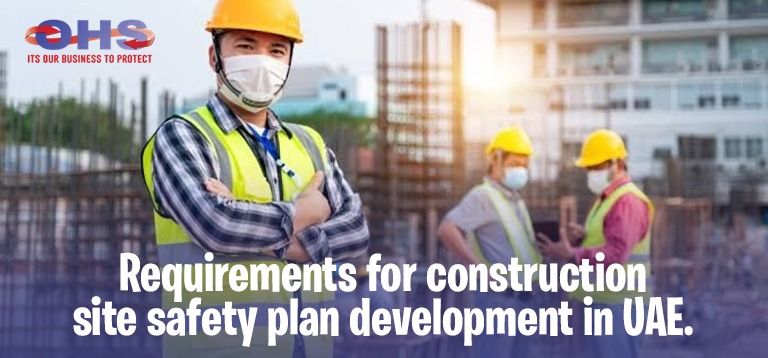
A safety plan for a construction site in the UAE must be compliant with Federal Decree-Law No. 33 of 2021 and the safety requirements at emirate level, e.g. Dubai Municipality standards, OSHAD system in Abu Dhabi or HS&E regulations of RAKEZ. The plan should contain a risk assessment, rules on PPE, emergency procedures, worker training records, site signs, and a designated safety officer. All plans shall be in writing, preserved on the site and available to all workers before the commencement of construction. At CorporateOHS, we help construction businesses in the UAE develop safety plans that meet all of these standards.
What Is a Construction Site Safety Plan?
A construction site safety plan is a written document. It explains how a construction company will keep workers safe on a job site. It lists the risks at the site. It also includes a number of measures made to mitigate those risks.
Think of it as a safety roadmap. It tells everyone what could go wrong and what to do about it. This plan is a must for every building site to be legally operational in the UAE.
Here is where CorporateOHS comes in. We work with construction companies across the UAE to design safety plans that meet federal legislation, emirate requirements, and real site realities.
Why Safety Plans Matter in the UAE
The UAE construction sector is large and rapidly expanding. Early 2026: More than 1.4 million people work in construction in the UAE. That is the greatest amount since the Expo 2020 development boom. Summers in the UAE may push temperatures beyond 90 degrees, and many projects run many floors high at once.
More workers and taller buildings bring more risk. A strong safety strategy preserves lives. It also shields a corporation from fines, project delays and legal issues
The Legal Framework Behind UAE Safety Plans
UAE does not have a single law for construction safety requirements. They’re the result of a number of sources working in tandem. This multi-layer construction is typically a surprise to the business until an inspection finds a gap.
1. Federal Decree-Law No. 33 of 2021
This is the federal law regarding labor. It outlines the responsibility of employers to provide safe working conditions and the correct protective equipment for workers. It must be followed by all construction companies in the UAE, irrespective of the emirate they work in.
2. Dubai Municipality Rules
Dubai Municipality follows the Dubai Building Code and the UAE Fire and Life Safety Code. Companies working in Dubai must check site plans against both of these codes.
Dubai also introduced Law No. 7 of 2025. This law brought new rules for contractor registration and classification, starting on 8 January 2026. Contractors who break these safety rules can face fines up to AED 200,000, license suspension for up to one year, removal from the contractor registry, or license cancellation.
3. Abu Dhabi’s OSHAD System
The Occupational Safety and Health Center, known as OSHAD, sets safety standards for construction work in and around Abu Dhabi. Companies working in the capital must build their safety plans around OSHAD requirements.
4. RAKEZ HS&E Regulations
The RAKEZ HS&E Construction Regulations lay out the basic safety rules for construction work inside the Ras Al Khaimah Economic Zone.
5. General Labor Law Duties
The UAE Labour Law and related Ministerial Decisions set the core rules for workplace health and safety. One duty under this law is posting safety rules on site in a language the workers understand. Companies must also train workers on the dangers of ignoring safety instructions and on general prevention steps.
6. Unified Building Codes
Local municipalities across the UAE apply unified building codes that cover construction safety and fire protection. These codes create one clear set of rules for all construction work in the country.
Key Elements Every UAE Safety Plan Needs
A complete construction site safety plan should cover the following parts.
Risk Assessment
List every hazard on site. This includes falls, electrical risks, heavy machinery, heat stress, and moving vehicles. Rate each risk and write down how it will be controlled.
Personal Protective Equipment (PPE) Rules
PPE is required for every construction worker in the UAE. This includes helmets, gloves, safety boots, high-visibility vests, and fall-protection harnesses. The plan must state which PPE is needed for each task and how often it gets checked.
Site Access and Signage
Sites need clear signage and clear access routes so workers and visitors stay safe—Mark danger zones, walkways, and vehicle paths.
Emergency Response Procedures
The plan must explain what to do during a fire, medical emergency, or building collapse. Emergency response plans are a required part of worksite safety protocols. List evacuation routes, meeting points, and emergency contact numbers.
Worker Training Records
Workers must be trained to handle equipment safely, operate machinery correctly, and respond to hazards. Keep a written record of every training session.
Heat Safety Measures
Since UAE summers are extreme, the plan should include a heat stress policy. This covers rest breaks, shaded areas, water access, and the mandated midday work break during summer months.
Named Safety Officer
Every site needs one person responsible for safety. This person checks that the plan is followed and reports any problems.
Ongoing Monitoring
Safety plans should include regular monitoring through formal audits, management inspections, toolbox talks, and daily safety meetings. How often these checks happen should match the risk level of the project.
Step-by-Step: How to Build a Construction Site Safety Plan in UAE
- Identify the applicable laws. Check federal rules plus the rules for your specific emirate (Dubai Municipality, OSHAD, or RAKEZ).
- Walk the site and list hazards. Note every risk before work begins.
- Write control measures for each hazard. State exactly how each risk will be reduced or removed.
- Assign a safety officer. Name one person to manage the plan day to day.
- Set PPE rules. List required gear for every task type.
- Plan emergency routes. Mark exits, assembly points, and first aid stations.
- Train every worker. Explain the plan in a language each worker understands. Keep signed records.
- Post the plan on site. Display it where workers can see it.
- Review and update regularly. Update the plan whenever site conditions change, or new risks appear.
Final Words
A building site safety plan is not simply paperwork. A serious accident is the difference between a typical workday. UAE legislation makes this plan necessary, but the actual value goes beyond compliance. A solid plan in place protects workers, keeps projects on schedule and protects companies from fines and legal trouble.
All sites are distinct. The hazards on a high-rise project in Dubai are not the same as those on a warehouse build in Ras Al Khaimah. That is why a safety plan should never be copied and pasted. It needs to match the real risks of the real site.
If you are a company that needs help to draft a safety plan that complies with UAE law and keeps your workers safe, CorporateOHS can assist you in every step of the way, from risk assessment to worker training.